SMARTSAFE · PROFESSIONAL EQUIPMENT
One platform for EV charging and component testing.
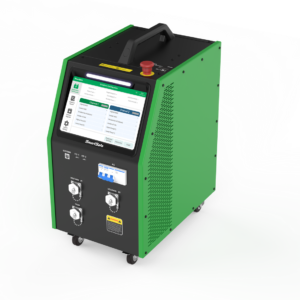
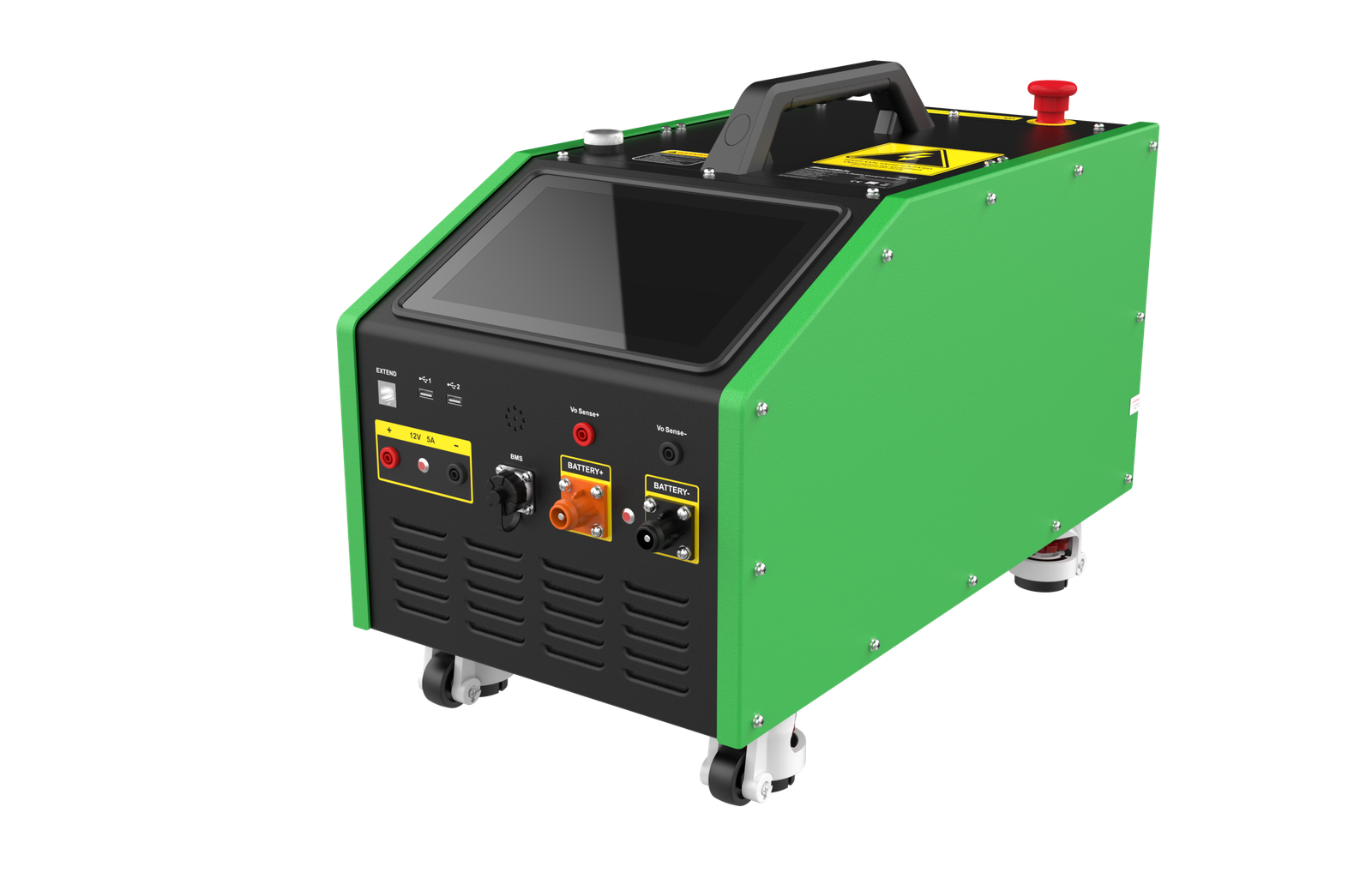
DP903 combines a mobile vehicle charger and an adjustable DC power source for off-vehicle work on high-voltage components. It adds a separate low-voltage supply and BMS parameter reading, making it suitable for workshop inspection and recovery procedures when the vehicle or pack is supported.
At a glance
50–1000 V DC
Set the high-voltage output and current on the touchscreen for the prescribed component or battery procedure.
Vehicle or pack
Use the compatible charging connector for a whole vehicle, or a controlled direct charging procedure for a pack.
BMS visibility
Review SOC, pack voltage, current, temperature and cell status when the corresponding BMS interface is supported.
Functions in the workshop
Mobile vehicle charging
The product sheet specifies charging current up to 67 A through a fast-charging connector described as a national-standard gun. Check the connector and regional kit before promising compatibility with a particular EV.
Direct battery-pack charging
The stated blind-charge mode can charge a pack without relying on its BMS. Set battery-specific voltage and current limits and follow the manufacturer’s supervision and isolation procedure.
High-voltage supply
Adjust output between 50 and 1000 V DC and 0.5–20 A for supported off-vehicle high-voltage components. The high- and low-voltage modules operate independently.
Auxiliary low-voltage supply
A separate 12 V DC output supplies up to 5 A to supported low-voltage circuits or control equipment.
BMS data and protections
The unit can acquire SOC, voltage, current, temperature and cell status. Listed protections include over/undervoltage, overtemperature, reverse connection, short circuit and current limiting; scope differs by input and output.
Workshop mobility
Foldable casters and a 10.1-inch colour capacitive screen support movement and parameter entry around a service bay.
Suggested workflow
- Identify the vehicle, battery or component, regional charge connector and required service procedure.
- Check the AC supply and cable set; isolate and verify the HV system before connections.
- Choose vehicle charge, pack charge, HV supply or 12 V output; set prescribed limits and monitor BMS values where available.
- Stop output, verify de-energisation and record values before disconnecting or returning the component to service.
Technical specifications
| Parameter | Value |
|---|---|
| High-voltage output / charging voltage | 50–1000 V DC |
| HV power-supply current | 0.5–20 A |
| Vehicle charging current | 67 A max |
| Auxiliary output | 12 V DC · 5 A max |
| AC input | 274–487 V · 45–55 Hz |
| Voltage accuracy | ±0.5% over 200–1000 V output |
| Current accuracy | ±1% over 20–100% of rated output current |
| Display | 10.1-inch colour capacitive touchscreen |
| System | Android 8.1 |
| Input protection | HV input overvoltage and undervoltage |
| Output protection | HV overtemperature, reverse connection and short circuit; LV current limiting and short circuit |
Before ordering and use
Charging-connector standard, three-phase installation and the cables supplied with the European kit must be confirmed. Direct pack charging without BMS control is a specialist procedure; set limits from the battery manufacturer’s instructions and use trained HV personnel.